In Memoriam
Trooper
Fred L. Walker
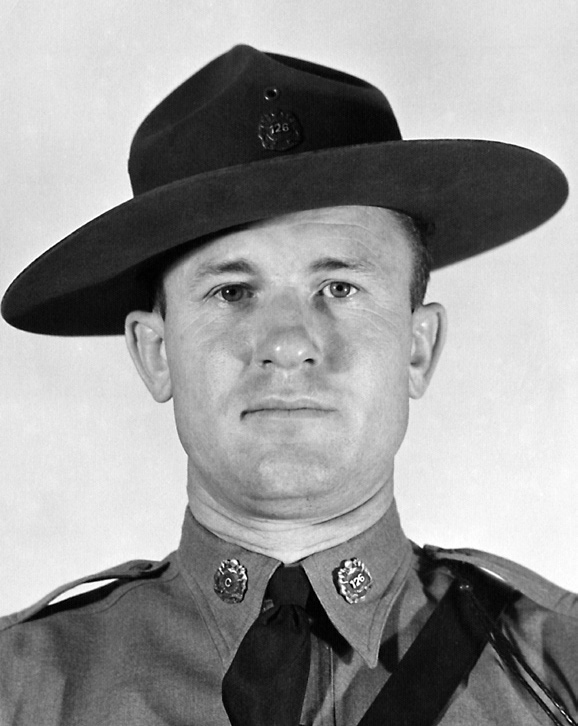
Badge #126 End of Watch: December 3, 1941
Remembrance
Fred L. Walker was born May 23, 1908, near Lathrop, MO, the sixth of 10 children, to James Oliver and Lenna Walker. He was raised on the family farm in Clinton County with his five brothers and three sisters. His middle name, Longfield, was given to him in honor of the family doctor in Lathrop. Walker graduated from Lathrop High School on May 19, 1927.
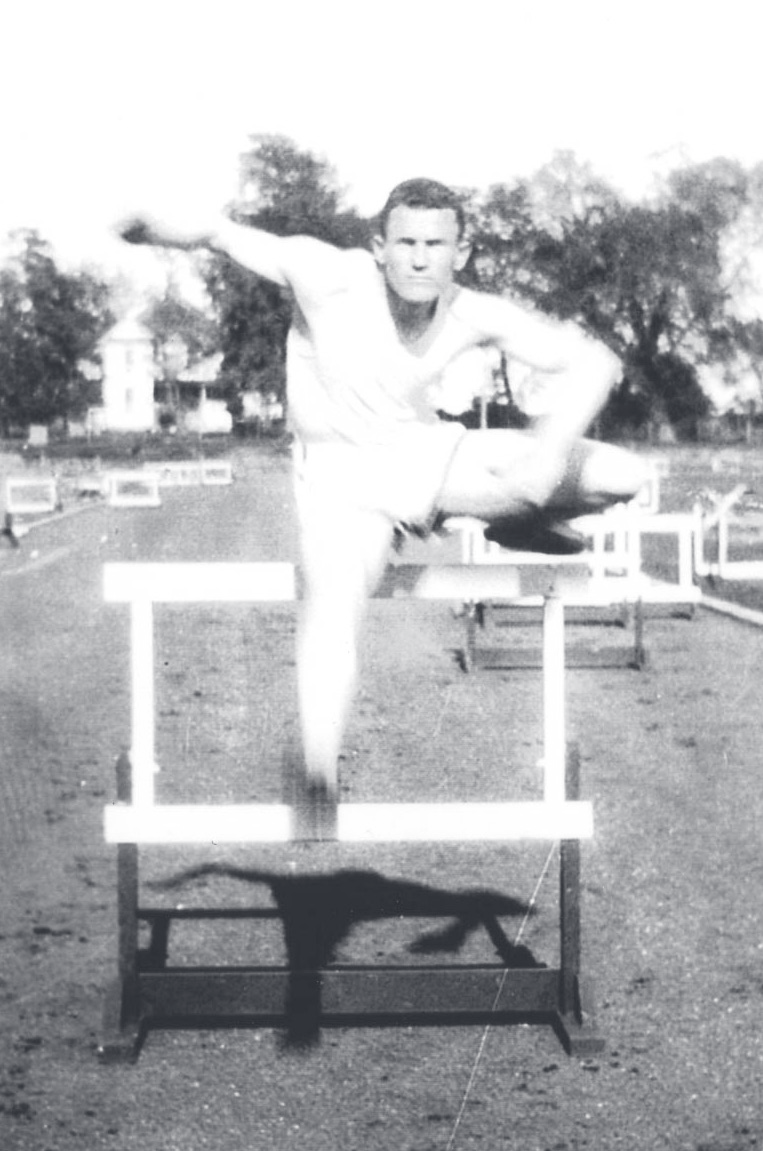
Walker was an outstanding athlete who excelled in track and field at Missouri Wesleyan College in Cameron, MO, and Baker University in Baldwin City, KS. Walker accumulated over 25 medals in the low hurdles, high hurdles, and long jump. In the 1930 Baker University Yearbook was written, “Walker was high point man for Baker in every dual meet and also in the Kansas conference meet. He holds the present school records in both the high and low hurdles, and is recognized as one of the best hurdlers in this section of the country.”
Walker also played football at both colleges. Following college Walker became the football coach at Gallatin High School. On July 1, 1937, he began his career as a member of the Missouri State Highway Patrol. Trooper Walker’s recruit class was trained at Camp Clark in Nevada, MO, and graduated on August 2, 1937.
Among Tpr. Walker’s classmates were two future Patrol superintendents, Colonel H.H. Waggoner and Colonel E.I. Hockaday. Upon graduation, Tpr. Walker was assigned to Troop C Headquarters. In November 1940, he requested and received a transfer to Festus, MO, in Jefferson County. On December 28, 1940, the Kansas City Star-Times reported Tpr. Walker, while offduty, had captured two convicts that had escaped from the Iowa State Penitentiary in Fort Madison, Iowa.
Tpr. Walker was off-duty in civilian clothes “on the Daniel Boone Parkway west of Gumbo,” when he noticed a car with a “mud covered license.” Tpr. Walker signaled for the driver to stop, and after a brief chase the two convicts exited their vehicle with their hands up. The Star-Times reported, “Walker was surprised to see them in prison clothes. They were driving a car stolen from Salisbury, MO.” The two convicts had escaped from prison while serving life sentences for murder and robbery.
On Tuesday, December 2, 1941, Tpr. Walker stopped a newer model car near Bloomsdale, MO, in St. Genevieve County. Unbeknownst to him, the vehicle had been stolen near Bonne Terre. The occupants of the car, George Alvin King, 17, and Norman Votaw, 20, both of Centralia, IL, were quickly handcuffed by Tpr. Walker and placed in his patrol car for transportation to Festus approximately 25 miles away. Less than one-half mile into the trip one of the prisoners drew a concealed pistol and shot Tpr. Walker.
The subjects threw Tpr. Walker from the patrol car and took his service revolver. They fled south from the shooting scene in Tpr. Walker’s patrol car. Tpr. Walker crawled part of the way to a farm near where the stolen vehicle had originally been stopped, and was transported in the stolen car by the owner of the farm, George Long, to Crystal City, MO. Tpr. Walker told Long that he had been shot with a gun he had missed on the two subjects. Tpr. Walker was transported by ambulance from Crystal City to Barnes Hospital in St. Louis.
Less than an hour after the shooting Tpr. Walker’s patrol car was recovered abandoned with his Patrol issued shotgun and rifle still in the vehicle. Tpr. Walker’s younger brother, Herb was a bus driver for the city of Hannibal, MO. Herb and his wife, Edith Allene, were notified of the shooting of Tpr. Walker and drove to Barnes Hospital immediately. A dense fog prevented other family members from arriving at the hospital since most of them lived on the western side of the state. When Herb and Allene arrived at the hospital Tpr. Walker was in an oxygen tent.
At the sight of his brother’s critical plight Herb Walker passed out. Tpr. Walker was conscious and inquired as to why they had come to the hospital. Tpr. Walker succumbed to his wounds and died on December 3, 1941. An intense 20-hour manhunt resulted in the capture of the two killers in Perryville, MO, just prior to Tpr. Walker’s death.
The suspects confessed their crime, but initially stated Tpr. Walker had been accidentally shot in a scuffle for his revolver. They later admitted that they decided to, “fight it out and escape using a gun Tpr. Walker had overlooked in searching.” Tpr. Walker was laid to rest in Lathrop, MO, on Saturday, December 6, 1941. On January 17, 1942, George Alvin King and Norman Votaw were each sentenced to 99 years in prison after they pleaded guilty to second degree murder.
In a plea to the court their attorney “blamed their poor environment for their crime. He asserted their home life had not been conducive to good morals and character.” On February 1, 1942, a bronze plaque was presented to Troop C by “Festus and Crystal City Friends” in honor of Tpr. Walker. A newspaper article read, “Tpr. Fred Walker made a lot of friends in the twin-city area and those who knew him well were outraged when two young auto thieves from Illinois fatally wounded him last month.”
The inscription on the plaque, which still hangs in Troop C Headquarters, reads: IN MEMORY OF FRED L. WALKER MISSOURI STATE HIGHWAY PATROL TROOP C DIED DECEMBER 3, 1941 FROM WOUND RECEIVED IN LINE OF DUTY Fred Walker set school records in both high and low hurdles at Baker University. On August 9, 1943, Tpr. Fred Walker’s younger brother, Herb, the seventh of the Walker children, became a member of the Missouri State Highway Patrol. Tpr. Herb Walker was stationed at Troop A in Lee’s Summit. Sergeant Herb Walker retired from the Missouri State Highway Patrol on October 31, 1972.
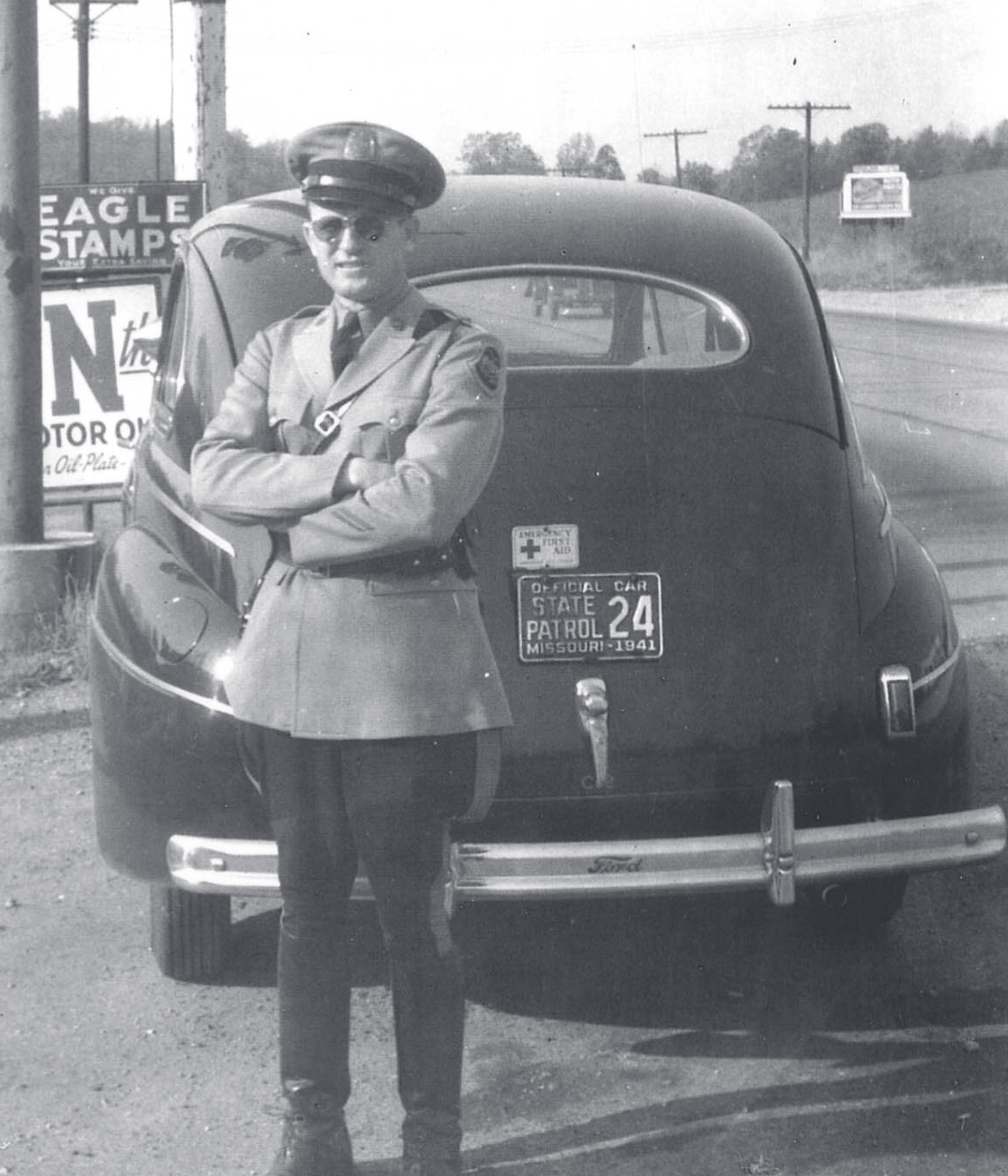
Sgt. Herb Walker’s son, Charles E. Walker, became a member of the Missouri State Highway Patrol on January 1, 1966, and retired as a sergeant from General Headquarters on August 31, 1994. Charles Walker was a toddler at the time of his uncle’s death. Herb and Allene Walker had a second son after Tpr. Walker’s murder and named him Fred. Tpr. Fred Walker stands with his patrol car.
Sgt. Herb Walker’s widow, Allene, retained the collar brass, displaying Badge 126, Tpr. Walker wore at the time he was shot along with the track and field medals from his illustrious college career. (Lt. James P. Ripley, Troop A, researched and wrote this profile in 2004. Ripley retired in 2013.) Tpr. Fred L. Walker was the second member of the Patrol to make the Ultimate Sacrifice.
Photos from this Memorial
Additional photographs from the memorial profile.